Selecting the right power backup solution is a high-stakes balancing act between ensuring critical reliability, adhering to strict noise compliance, and managing Total Cost of Ownership (TCO). For facility managers and business owners, the decision often narrows down to the fundamental architecture of the engine's cooling system. A common misconception persists in the market: that "bigger is always better" regarding liquid-cooled options, or that "simpler is invariably cheaper" when considering air-cooled models.
However, the specific mechanism used to cool the engine impacts far more than just temperature; it dictates the unit's sound attenuation capabilities. This "silent" factor is crucial for deployments in urban centers, hospitals, or residential zones where noise pollution is heavily regulated. This article provides a technical, evidence-based comparison to help you determine which cooling architecture fits your specific power loads and site constraints.
Key Takeaways
The 22kW Threshold: Air-cooled units are generally capped at ~22kW; liquid cooling is the standard for industrial loads above 25kW.
The Noise Equation: Liquid-cooled silent diesel generators are structurally quieter due to water jackets and lower RPMs (1800 vs. 3600), making them superior for strict noise ordinances.
Lifespan vs. Cost: Liquid-cooled units cost 50–100% more upfront but offer 2–4x the lifespan (2,000+ hours) compared to air-cooled models (approx. 1,000 hours).
Maintenance Reality: Air-cooled units require less skilled labor (no fluids to leak), while liquid systems demand rigorous monitoring of coolant chemistry and pumps.
Engineering Differences: How Cooling Impacts "Silent" Operation
To understand why one generator hums quietly while another roars, we must look inside the enclosure. The engineering approach to thermal management fundamentally alters the acoustic signature of the machine. Whether you are sourcing a Silent Diesel Generator for a hospital or a construction site, the cooling method is the primary driver of noise levels.
Air-Cooled Mechanism (The "HVAC" Approach)
Air-cooled engines rely on a direct and somewhat aggressive method of heat dissipation. They function similarly to a lawnmower engine or a large laptop fan. By circulating massive volumes of ambient air over finned metal cylinders, they transfer heat directly from the engine block to the atmosphere.
The noise implication here is significant. Because air is a less efficient heat conductor than water, these engines must push high volumes of air to stay cool. This requirement necessitates large vents that inevitably allow internal engine noise to leak out. Furthermore, to generate sufficient airflow, these engines typically operate at higher speeds, often around 3600 RPM. This results in a higher-frequency whine that is more difficult to mask than lower-frequency sounds.
Water-Cooled Mechanism (The "Automotive" Approach)
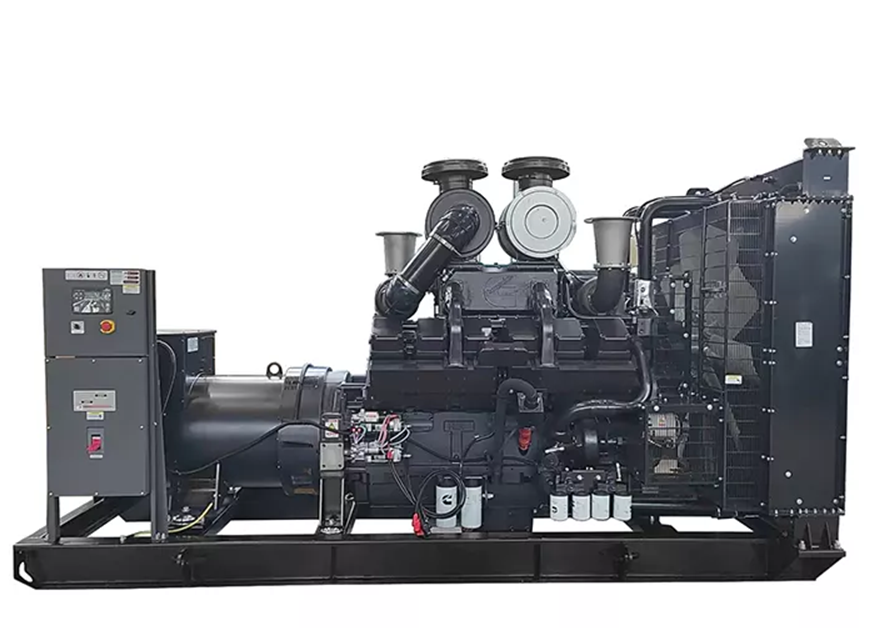
In contrast, liquid-cooled systems mirror the engine under the hood of your car. They utilize a closed-loop system comprising a radiator, a water pump, and a thermostat. Coolant circulates through internal channels in the engine block, absorbing heat before passing through the radiator to be cooled by a fan.
Structurally, this offers a massive acoustic advantage. The "water jacket"—the layer of coolant surrounding the combustion chambers—acts as a dense sound insulator, dampening the mechanical noise of the pistons. Additionally, these industrial engines are often engineered to run at a lower speed, typically 1800 RPM (4-pole). This produces a low-frequency hum that is much less intrusive to the human ear and far easier to attenuate with a soundproof enclosure.
Why "Silent Diesel Generator" Specifications Vary
Marketing terms can be misleading. A unit labeled "silent" might still be disruptively loud depending on its cooling architecture. When comparing specifications, look closely at the decibel ratings. Liquid-cooled units frequently achieve quiet operation levels of 60–65 dBA at 7 meters. Conversely, air-cooled units, despite silent branding, often hover between 65–75 dBA due to the unavoidable physics of high-speed fans and open ventilation needs.
The 22kW Limit: Sizing and Duty Cycle Suitability
One of the hardest physical limits in generator engineering is the capacity of air to carry heat away from a combustion engine. This creates a distinct dividing line in the market based on power output.
The Power Output Divide
For requirements under 22kW, air-cooled units are the dominant choice. They are ideal for residential backup, small retail shops, and light commercial use where the load is minimal. Physically, once an engine produces more than roughly 22kW of power, the surface area required to cool it with air alone becomes impractical.
Once you cross into the zone above 25kW, liquid cooling becomes the only viable option. From mid-sized commercial units up to a massive industrial Diesel Generator in the MW class, liquid cooling is mandatory to prevent catastrophic overheating. This makes liquid-cooled systems the standard for data centers, manufacturing plants, and whole-facility backups.
Duration of Operation (Duty Cycle)
The intended runtime also dictates the choice. Air-cooled units are generally rated for "Standby" application. They are designed to run for the duration of an emergency—hours or perhaps a few days. If pushed to run continuously for weeks, they risk thermal fatigue.
Liquid-cooled systems are essential for "Prime" or "Continuous" power applications. Their stable thermal management allows them to operate 24/7 without power derating. This means they do not lose efficiency or capacity as the engine heats up, ensuring consistent power delivery during extended outages.
Environmental Derating
Ambient temperature plays a crucial role. Air-cooled units struggle in extreme heat. In environments above 100°F (38°C), their efficiency drops sharply because the air used for cooling is already hot. Liquid-cooled systems are far more resilient. A well-sized radiator can maintain peak performance even in desert-like conditions, making them the preferred choice for regions with high ambient temperatures.
Installation Realities and Site Requirements
The physical installation of these units differs drastically. Facility managers must account for footprint, weight, and civil engineering requirements before purchase.
| Feature | Air-Cooled Generators | Liquid-Cooled Generators |
| Footprint & Weight | Compact and lightweight (approx. 1/4 the weight). Can sit on composite pads or compacted soil. | Heavy and bulky. Requires a reinforced concrete slab and crane or forklift for deployment. |
| Ventilation | Needs 3-5 ft clearance on all sides. High airflow intake/exhaust is critical. | Radiator-focused airflow allows flexible placement, though fresh air intake is still needed. |
| Cold Weather | Simpler startup. No coolant to freeze. Immune to burst pipes. | Requires block heaters and specific anti-freeze mixtures to prevent gelation in sub-zero temps. |
Footprint and Weight
Air-cooled generators are favored for their compact nature. Being roughly a quarter of the weight of their liquid-cooled counterparts, they can often be installed in tight residential yards using prefabricated composite pads or even leveled gravel. Liquid-cooled units are heavy pieces of industrial machinery. They almost always require a specifically engineered reinforced concrete slab to support the weight and vibration, alongside heavy equipment like cranes for the initial placement.
Ventilation and Space
Airflow is non-negotiable for air-cooled units. They typically require significant clearance—often 3 to 5 feet on all sides—to ensure they do not recycle their own hot exhaust. Liquid-cooled units are slightly more forgiving regarding immediate clearance because the radiator fan directs heat away more aggressively, though they still require adequate fresh air intake for combustion and cooling.
Cold Weather Considerations
In freezing climates, simplicity favors the air-cooled engine. Without water or coolant, there is no risk of a radiator freezing or a pipe bursting. While oil viscosity remains a factor, startup is generally straightforward. Liquid-cooled engines in sub-zero environments require active management. They rely on block heaters and precise coolant mixtures to prevent the fluid from freezing or gelling, adding a layer of complexity to winter preparedness.
Reliability, Lifespan, and Maintenance Protocols
When analyzing the long-term viability of an asset, lifespan and maintenance regimes are just as important as the initial purchase price.
Expected Service Life
There is a stark difference in longevity. Air-cooled engines are typically designed for a service life of approximately 1,000 engine hours. The high RPM (3600) necessary for cooling creates faster wear on pistons and bearings. Conversely, liquid-cooled engines are built to industrial standards. Operating at lower RPMs reduces internal friction, allowing these units to last for 2,000 to 4,000 hours or more with proper care. For a business seeking a 10-20 year asset, liquid cooling is the superior investment.
Maintenance Complexity
Air-cooled units win on simplicity. There are no hoses to leak, no water pumps to seize, and no radiators to clog. Maintenance primarily involves oil changes, air filter replacements, and keeping the cooling fins free of dust and debris. This low barrier to entry makes them popular for sites with limited technical staff.
Liquid-cooled systems introduce complexity. To keep them running, you must monitor coolant levels, check pH balance to prevent internal cavitation, inspect hoses for dry rot, and ensure the water pump belt is tensioned correctly. Negligence here can be costly. If you do not have an in-house team, you will likely need a professional service contract to manage these fluid systems and ensure the thermostat's 70°C switching logic functions correctly.
Failure Modes
The risks differ by design. Air-cooled units are prone to overheating during summer heatwaves, especially if their cooling fins become clogged with pollen or dust. In extreme cases, this leads to cylinder seizing. Liquid-cooled units face risks related to their plumbing: coolant leaks, wet stacking (if the engine is run with too little load), and corrosion if the cooling system is neglected over time.
Financial Analysis: Upfront Price vs. Total Cost of Ownership (TCO)
The price tag on the unit is only the beginning of the financial story. A thorough procurement process must evaluate Capital Expenditure (CapEx) against Operating Expenditure (OpEx).
Initial Capital Expenditure (CapEx)
Liquid-cooled units generally command a premium of 50–100% over comparable air-cooled models. This cost reflects the complex components involved: the radiator, the water pump, and the heavy-duty cast iron engine block. Furthermore, the installation costs for liquid systems are typically about 30% higher due to the need for concrete work, electrical complexity, and heavy lifting equipment.
Operating Expenditure (OpEx)
However, operational costs often favor the liquid-cooled diesel generator. Under load, these engines generally offer better fuel efficiency (L/kWh) because their thermal environment is precisely controlled by the thermostat. Regarding labor, while the maintenance is more complex, the intervals are longer. A liquid-cooled unit might need service every 500 hours, whereas an air-cooled unit running at high RPMs might require attention every 250 hours. Over a decade, fewer service visits can offset the higher cost of parts.
ROI Scenario
Your Return on Investment depends on usage. For standard residential backup where the unit runs fewer than 50 hours a year, an air-cooled generator offers a better ROI; the lower upfront cost outweighs the shorter lifespan. However, for mission-critical businesses or areas with unstable grids requiring over 100 hours of runtime per year, the TCO of a liquid-cooled system is significantly lower over a 10-year period due to its durability and repairability.
Decision Framework: Which Silent Diesel Generator Do You Need?
Making the final choice involves mapping your constraints to the technical realities discussed above. Use this framework to guide your procurement.
Choose Air-Cooled If:
Your power requirement is strictly under 20kW.
Usage is defined as emergency standby for rare, short-duration outages.
Budget is the primary constraint and initial CapEx must be minimized.
The installation site has limited space or cannot support a permanent concrete foundation.
The climate is temperate or extremely cold, where freezing fluids are a major risk.
Choose Water-Cooled If:
Your power requirement exceeds 25kW.
"Silent" operation is critical, such as in neighborhoods with strict HOA or municipal noise limits (below 65 dBA).
The application requires extended runtimes (days or weeks) or prime power functionality.
The installation is in a region with high ambient temperatures (>100°F), where air cooling would become inefficient.
Longevity and asset depreciation are accounting priorities; you need a machine that lasts decades, not years.
Conclusion
The choice between water-cooled and air-cooled silent diesel generators is ultimately a trade-off between simplicity and performance. Air-cooled units offer a cost-effective, low-maintenance solution for lighter loads and occasional use. In contrast, liquid-cooled systems provide the robustness, longevity, and quiet operation required for industrial applications and critical infrastructure.
We strongly advise against under-sizing your cooling capacity to save on upfront costs. It is far safer to over-spec a liquid-cooled system for a critical business than to risk a thermal shutdown with an air-cooled unit during a summer heatwave. Before making a purchase, consult with a site engineer to calculate your exact load requirements and apply necessary ambient derating factors to ensure your power stays on when you need it most.
FAQ
Q: Is a water-cooled generator quieter than an air-cooled one?
A: Yes, generally. Water-cooled generators use a liquid jacket around the engine which dampens sound. More importantly, they typically operate at 1800 RPM, producing a low-frequency hum. Air-cooled units often run at 3600 RPM to drive fans, creating a louder, high-pitch noise that is harder to suppress.
Q: Can an air-cooled diesel generator run for 24 hours continuously?
A: It is possible, but not recommended for extended periods. Air-cooled units are susceptible to heat buildup. Manufacturers usually rate them for standby use. Running them continuously for 24+ hours, especially in hot weather, risks thermal fatigue and performance degradation.
Q: Do I need a concrete slab for an air-cooled generator?
A: Not always. Because air-cooled units are significantly lighter, they can often be installed on prefabricated composite pads or compacted gravel/soil beds. However, local building codes should always be checked to ensure compliance with stability requirements.
Q: What is the maintenance difference between the two?
A: Air-cooled maintenance is simple: keep fins clean, change oil, and replace filters. Liquid-cooled maintenance is more complex: it requires checking coolant chemistry, inspecting hoses for leaks, maintaining the water pump, and checking belts, in addition to standard oil and filter changes.
Q: At what temperature does an air-cooled generator overheat?
A: Most air-cooled units begin to lose efficiency (derate) when ambient temperatures exceed 100°F (38°C). If the temperature climbs significantly higher, or if ventilation is blocked, the unit may trigger a high-temperature shutdown to protect the engine.


