Open-frame generators may offer a 20–30% upfront discount, but viewing this as merely a 'loud vs. quiet' decision is a strategic error. The real trade-off is between raw machinery and turnkey infrastructure. The reality is simple: an open engine requires a building; a Silent Diesel Generator is the building. This guide analyzes Total Cost of Ownership (TCO) to show how housing and retrofit costs often erase those initial savings, helping you decide if the premium is justified."
Key Takeaways
Decibel Logarithms: A standard diesel generator (95+ dBA) is exponentially louder than a silent unit (65–75 dBA); the difference dictates where you can legally install it.
The "Shed" Tax: Open units require a dedicated, weather-proof structure (CAPEX), whereas silent units come with a weather-resistant canopy (all-in-one).
Safety Liability: Enclosed units reduce burn risks and fuel theft, critical for sites with public or family access.
Resale Value: Integrated silent units typically hold higher resale value due to broader market appeal (residential + commercial).
The "Open Frame" Fallacy: Analyzing the Hidden Costs
Many buyers view the metal enclosure of a silent generator as an optional accessory. In reality, the absence of this enclosure on an open unit transfers the burden of protection and noise control directly to you. When you purchase an open-frame set, you are buying an engine and an alternator mounted on a skid. You are not buying a complete installation solution.
Infrastructure Requirements
A diesel engine cannot sit exposed to the elements. Rain, snow, and saline humidity will rapidly corrode electrical components and seize mechanical parts. Therefore, every open generator requires a structure. This might be a custom-built timber shed, a concrete machine room, or a modified shipping container.
This creates immediate capital expenditure (CAPEX) known as the "shed tax." You must calculate the cost of materials, labor, and land use for this structure. Furthermore, a simple roof is insufficient. The structure requires engineered ventilation to ensure the Diesel Generator does not suffocate on its own exhaust or overheat. By the time you pour a concrete slab and erect a ventilated weather-proof room, the 20% savings on the generator purchase price have likely evaporated.
The Noise Mitigation Retrofit
Buyers often assume they can silence an open unit later if the noise becomes problematic. This is a risky and expensive assumption. Retrofitting a machine room for sound attenuation is significantly more complex than buying a pre-engineered canopy.
To replicate the performance of a factory-built silent unit, you would need to install:
Aftermarket exhaust mufflers (residential grade).
Acoustic foam lining on all walls.
Sound-baffled air intake and outlet louvers.
Risk Factor: DIY soundproofing frequently leads to engine failure. Amateurs often block airflow in an attempt to block noise. If the engine cannot pull in enough cool air, it overheats, triggering shutdowns or permanent cylinder damage. Factory silent units are tested to balance airflow with noise reduction; a DIY shed is not.
Operational Limitations
Noise pollution laws are becoming stricter globally. An open unit running at 95+ dBA acts as a "noise beacon." In mixed-use zones, residential areas, or near hospitals, you may be legally restricted to running the equipment only during daytime hours. This defeats the purpose of an emergency backup system, which must run whenever the grid fails, regardless of the time. If your local ordinance forbids noise above 70 dBA at the property line after 10 PM, an open generator renders you non-compliant the moment it starts.
The Science of Silence: What You Are Actually Paying For
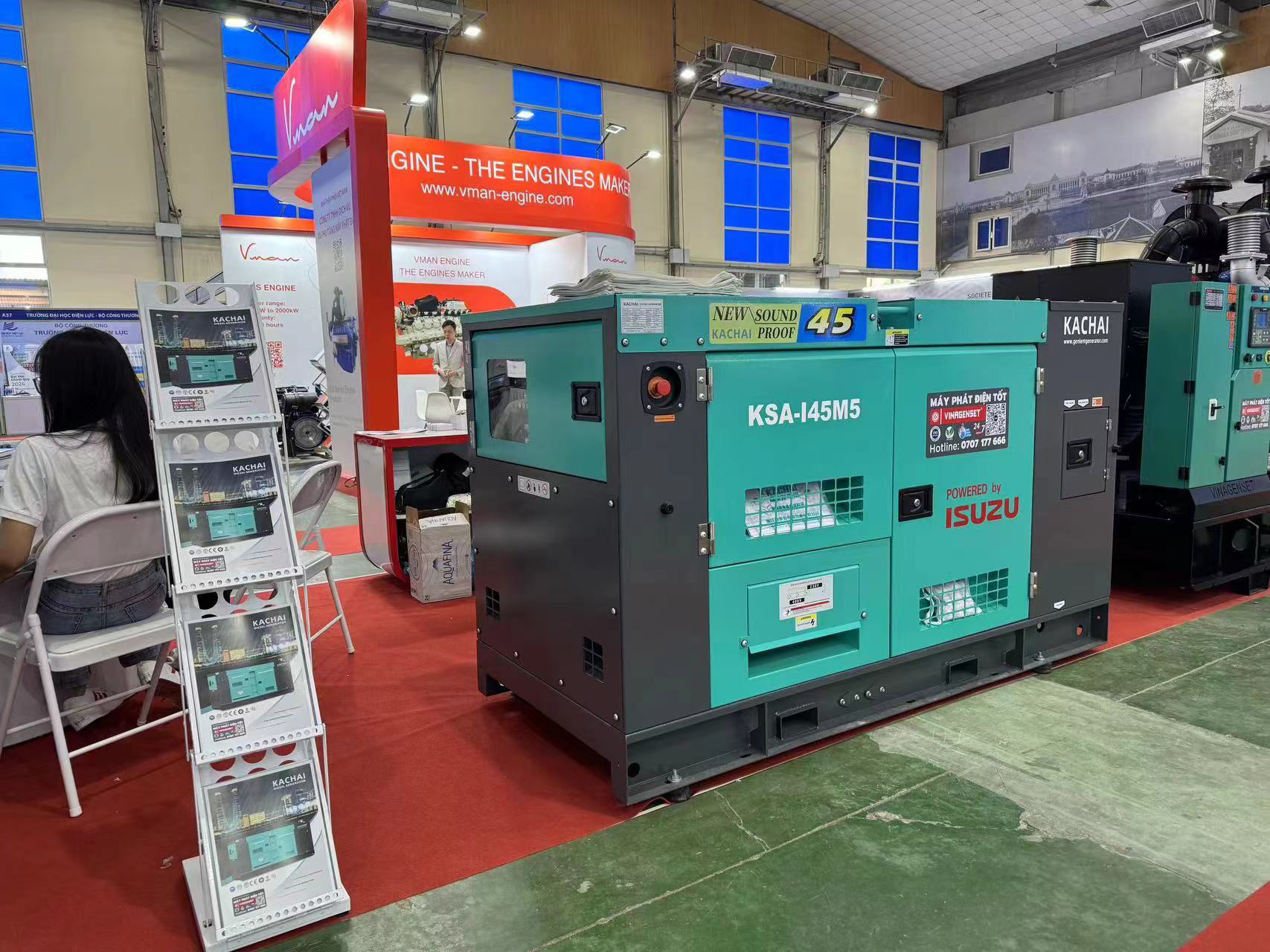
The premium price of a silent generator pays for sophisticated engineering, not just a metal box. Manufacturers use physics to trap sound waves while allowing heat and exhaust to escape. Understanding these components helps justify the investment.
Engineering vs. Magic
Three main technologies work in unison to drop decibel levels:
Acoustic Attenuation: The interior of the canopy is lined with high-density, fire-retardant foam or rock wool. This material absorbs high-frequency noise from the combustion process rather than reflecting it.
Airflow Baffles: Sound travels in straight lines; air can turn corners. Silent enclosures utilize "tortuous path" intake and exhaust ducts. These force air to navigate multiple 90-degree turns. The sound waves hit the insulated walls at every turn and lose energy, while the air flows through to cool the engine.
Anti-Vibration Mounting: A significant portion of generator noise is actually structural vibration transferred into the ground. Silent units use heavy-duty rubber or spring isolators between the engine block and the frame. This disconnects the mechanical vibration from the chassis, stopping the "ground rumble" often felt near open units.
The dBA Impact
The decibel (dBA) scale is logarithmic, not linear. A 10 dBA increase represents a doubling of perceived loudness. This means the difference between a 75 dBA silent unit and a 95 dBA open unit is not "20% louder"—it is four times as loud to the human ear.
The following table illustrates how this difference impacts placement strategy:
| Feature | Silent Diesel Generator (65–75 dBA) | Open Frame Unit (95–105 dBA) |
| Perception | Similar to a vacuum cleaner or busy office. | Similar to a chainsaw or rock concert. |
| Communication | Conversation possible at 1 meter. | Shouting required; hearing protection mandatory. |
| Placement Distance | Can be placed ~20 ft from buildings. | Needs 100+ ft to reach safe indoor levels. |
| Regulatory Risk | Low; complies with most HOA/City codes. | High; likely violates noise ordinances. |
Durability, Safety, and Compliance: Non-Monetary ROI
Beyond noise, the enclosure provides critical protection for both the machine and the people around it. These factors contribute to the "Non-Monetary ROI" (Return on Investment) by reducing liability and maintenance frequency.
Weather Protection (IP Ratings)
Generators are vulnerable machines. The alternator contains copper windings that can short circuit if exposed to driving rain or high humidity. The fuel system can suffer if water enters the tank vents. Silent enclosures act as a shield, typically offering an Ingress Protection (IP) rating that certifies resistance to dust and moisture.
For coastal areas, the canopy is essential. It protects the engine block and radiator from saline air, which causes rapid rust on open units. This protection significantly extends the operational lifespan of the asset, ensuring that the alternator remains dry and ready to fire during a storm.
Human Safety & Liability
An operating diesel engine is a hazard zone. Exhaust manifolds can reach temperatures exceeding 500°C (932°F). On an open-frame unit, these hot surfaces are often exposed. If a child, a pet, or an untrained employee brushes against the unit, severe burns can occur instantly.
Thermal Protection: A silent enclosure fully covers the turbocharger and exhaust manifold. The outer skin of the canopy remains safe to touch, eliminating burn liability.
Mechanical Safety: Open units have exposed cooling fans and alternator belts spinning at high speeds. Loose clothing or curious fingers can lead to catastrophic injuries. The enclosed design of a Silent Diesel Generator removes this mechanical risk entirely, making it the only responsible choice for sites with public access.
Security Features
Fuel theft is a common issue for backup generators, especially those at remote telecom sites or unattended vacation homes. Open units provide zero security; the fuel cap and lines are accessible to anyone with a siphon hose. Silent units typically feature lockable access doors. You can secure the control panel, the fuel filler, and the battery behind a keyed lock, preventing tampering and theft.
The Trade-Offs: Where Silent Generators Fall Short
While the benefits are substantial, silent units are not superior in every single metric. Buyers must acknowledge specific trade-offs regarding maintenance and physics.
Maintenance Accessibility
The same panels that trap noise also block access. Changing the oil or replacing a filter on a silent unit takes longer because you often have to unlock doors or unbolt side panels to reach the service points. On an open unit, everything is visible and reachable instantly.
Furthermore, visual inspections are harder. With an open unit, you can walk past and spot a small oil leak or a fraying belt immediately. With a silent unit, you must deliberately open the doors to perform checks. If operators become lazy, small leaks inside the canopy can go unnoticed until they become major failures.
Heat Dissipation
Open units have the advantage of natural convection. Heat radiates away from the engine block in all directions. Silent units rely entirely on their engineered airflow systems to push heat out. In extreme ambient temperatures (above 40°C / 104°F), a silent unit is more prone to overheating if the radiator matrix is even slightly clogged with dust. They require strict adherence to cleaning schedules to maintain cooling efficiency.
Footprint and Weight
Silence is heavy. The steel canopy and acoustic insulation add significant weight to the package. A silent unit is physically larger and heavier than an open equivalent, which complicates transport and placement. You may need a larger forklift or a crane for installation, and the concrete pad must be rated for the higher static load.
Decision Framework: Open vs. Silent Diesel Generator
To finalize your decision, align your specific scenario with the correct hardware. We can categorize most use cases into two distinct buckets.
Scenario A: The "Silent" Investment is Mandatory
If your situation matches these criteria, the open unit is a false economy. The regulatory fines and infrastructure costs will eventually force you to upgrade.
Residential Backup: You have neighbors within hearing range, or you live in an HOA with strict noise covenants.
Urban/Retail Business: You run a clinic, restaurant, or office where customer experience cannot be disrupted by the roar of an engine.
Events/Film: You need temporary power for weddings, outdoor markets, or film sets where power must be audible-invisible.
Scenario B: The "Open" Unit is Sufficient
In these scenarios, noise is secondary to cost or raw utility.
Remote Agriculture/Mining: The equipment is located miles from the nearest residence, and wildlife is not a concern.
Dedicated Plant Rooms: Your facility already has a soundproofed, ventilated machine room designed specifically to house open industrial engines.
Budget-Critical Construction: You need temporary power on a loud job site where ear protection is already mandatory PPE for all workers.
Conclusion
The premium paid for a Silent Diesel Generator is essentially a payment for "turnkey usability." When you buy a silent model, you are buying the freedom to place the unit almost anywhere on your property without the headache of designing and building a separate house for it. You are paying for safety, compliance, and neighborly peace.
If your generator will be located within 100 feet of people, property lines, or open windows, the silent enclosure is not a luxury—it is an operational necessity. The open frame unit belongs on remote farms or inside dedicated industrial plant rooms. For everyone else, the risks of noise complaints and the hidden costs of infrastructure make the silent unit the smarter long-term investment.
Before finalizing your purchase, we advise you to check your local municipal codes regarding noise decibel limits at property lines. This limit is usually between 65 and 70 dBA for residential zones, a standard that only a silent generator can meet.
FAQ
Q: How much quieter is a silent diesel generator compared to an open one?
A: The difference is typically 20–30 dBA. Because the decibel scale is logarithmic, this is a massive reduction. An open unit (95–100 dBA) sounds like a chainsaw or a subway train, requiring ear protection. A silent unit (65–75 dBA) sounds like a vacuum cleaner or normal conversation. This reduction allows the unit to be placed near homes or offices without causing a disturbance.
Q: Do silent generators overheat more easily?
A: They can if not maintained, but they are engineered to cool effectively. Silent units use electric fans and directed airflow channels to force air over the engine. However, because they are enclosed, they rely 100% on this airflow. If you block the intake vents or let the radiator get clogged with dust, they will overheat faster than an open unit. Proper placement away from walls is critical.
Q: Is the fuel efficiency different between open and silent models?
A: Generally, they use the exact same engine and alternator, so fuel consumption is identical under load. However, silent units may run slightly hotter than open units due to the enclosure. In rare cases, if the cooling fan has to work significantly harder to pull air through restrictive baffles, there might be a negligible drop in overall system efficiency, but it is rarely noticeable on a fuel bill.
Q: Can I build my own box for an open generator to save money?
A: You can, but it is risky. Building a DIY enclosure is the leading cause of generator failure. It is very difficult to calculate the correct airflow volume (CFM) to cool a diesel engine while simultaneously blocking sound. DIY boxes often trap heat, causing the engine to overheat and seize. Furthermore, placing an open unit inside a homemade box will likely void the manufacturer's warranty.


